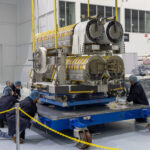
A new Perspectives article in Stem Cell Reports spotlights the paradigm shift in microgravity research, where industry leaders—including Redwire’s Chief Scientist Ken Savin—are leveraging crystal growth and cell-based solutions to revolutionize science and industry.
Redwire Chief Scientist Ken Savin and a diverse team of regenerative medicine researchers are calling attention to a new era in space-based biomanufacturing, as detailed in a recent Stem Cell Reports’ Perspectives article, “Biomanufacturing in low Earth orbit: A paradigm shift.”
The article, authored by leading researchers from the International Space Station (ISS) National Laboratory, and key institutes and space infrastructure firms, showed how the field of regenerative medicine is undergoing a fundamental transformation in how it leverages space.
“We are seeing a shift in why we go to space. Instead of asking, ‘Can we do this?’ and ‘How do we do this?’ with engineering as the solution, researchers are now saying, ‘What can we do with what we know and what we’ve got?’” explains Savin. “This paper highlighted key opportunities, the biggest [being] the growth of crystals—for structure determination and for form and formulation—and cell-based solutions, systems for study, models, and ultimately products for therapy.”
Redwire is a pioneer in crystallization of pharmaceutical products in microgravity, having flown dozens of experiments to space using Redwire’s Pharmaceutical In Space Laboratory (PIL-BOX) with major global pharmaceutical companies such as Eli Lilly and Company and Bristol Myers Squibb. With PIL-BOX, Redwire has demonstrated outstanding control of the microgravity crystal development process in areas relevant to pharmaceutical development. In August, Redwire launched its SpaceMD subsidiary to focus on the commercialization of its on-orbit pharmaceutical manufacturing capabilities.
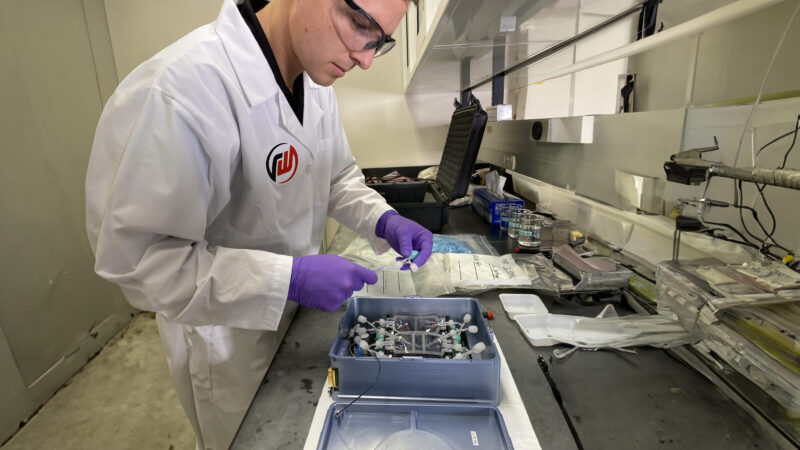
On the evolution of protein crystallization in space, the paper noted that traditionally, crystals were grown to understand the structure of proteins, but now, the emphasis is on how different crystal forms can impact manufacturing, storage and delivery of pharmaceuticals.
The true benefit of growing crystals in space “is the physical properties that the crystals give us, and that has impact on our ability to manufacture and store it and transform it into a product for patients,” says Savin.
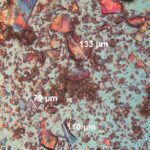
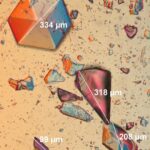
In multiple experiments to the ISS, Redwire has found that small molecule drug crystals, which comprise the majority of all pharmaceuticals, are larger and more highly ordered than their terrestrial-grown counterparts when grown on-orbit. In 2024, in a world’s first accomplishment, Redwire replicated space-grown crystal forms on Earth using crystals returned from space as seeds, or templates. These seed templates hold great promise in creating drugs with greater stability, manufacturability and efficacy.
The article also highlighted the growing importance of cell-based solutions, such as stem cells and organoids, for both research and therapeutic applications. “My bet is that these solutions are going to be associated with stem cells and organoids and small tissue constructs. That’s where we’re going to see the breakthrough,” Savin predicts.
Space could unlock cures for neurogenerative diseases like Alzheimer’s, primary progress MS and Parkinson’s disease, notes Paula Grisanti, CEO, National Stem Cell Foundation (NSCF). The Foundation has conducted six space station investigations using human brain organoids, tiny replicas that mimic how cells behave in the brain. NASA is funding three more missions through 2027.
“Space is opening a whole new door to potential cell, gene, and drug therapies that don’t currently exist for these diseases,” she says.
Collaboration is a hallmark of this new era and is reflected in the article’s diverse authorship from the ISS National Laboratory, Wake Forest Institute for Regenerative Medicine, Axiom Space, Sierra Space Corp., UC San Diego Sanford Stem Cell Institute and Redwire. According to Savin, many contributors worked together previously at the Center for the Advancement of Science in Space.
“We are competitors and collaborators,” he adds, describing the regenerative medicine’s push to space “a big science experiment—It is in its infancy, but the potential is huge,” he adds.
As the commercial sector takes a more prominent role in space research, Savin believes the future is bright, moving quickly to the point where discoveries and advances in drugs made in space will benefit people on Earth.
A notable example is Merck’s KEYTRUDA®, a top-selling cancer drug, which benefited from space-based experiments that produced more uniform crystals; this breakthrough enabled Merck to develop an improved formulation for easier and more cost-effective patient delivery.
Similarly, ExesaLibero Pharma is working with Redwire’s SpaceMD to advance and enhance its groundbreaking small-molecule drug ELP-004 and other relevant compounds via the PIL-BOX system. This drug could hold the key to controlling the insidious bone erosion that numerous debilitating diseases cause, such as rheumatoid arthritis, multiple myeloma, diabetes, periodontal disease, and tuberculosis.
“It really will take that first one—once people see it, it will spark a gold rush,” Savin says.
Download Redwire’s Mission Report: The Crystal Frontier – How Space-based Manufacturing will Revolutionize Drug Discovery.