The team also successfully delivered a second computer system for Genesis, an ESA navigation mission
Redwire recently completed on time deliveries of onboard computers for two European Space Agency (ESA) missions. The deliveries included an OBC flight model for the Rapid Apophis Mission for Space Safety (Ramses) mission, a planetary defense mission that will involve in-depth observations of the asteroid Apophis before it approaches Earth, and an OBC engineering model for ESA’s Genesis mission, a navigation mission to measure Earth down to the millimeter.
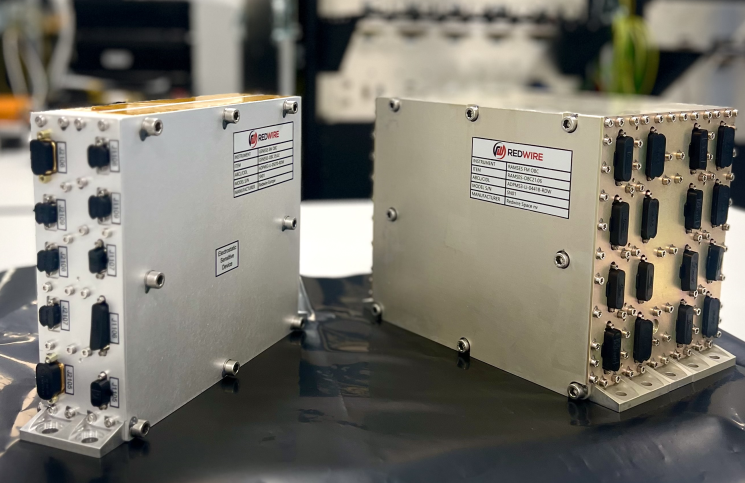
The computer systems will serve a critical role as the “brain” of the spacecraft, governing spacecraft control, data handling, and crucial communications with Earth. The deliveries to OHB Italia, prime contractor and spacecraft provider for the missions, follow successful unit testing of the onboard computers at Redwire’s state-of-the-art facility in Belgium.
The onboard computers for Ramses and Genesis are part of Redwire’s third generation Advanced Data and Power Management System (ADPMS-3) avionics suite and designed to meet the demanding performance, reliability, and redundancy requirements of complex space missions, from low Earth orbit to deep space.
The Ramses Mission
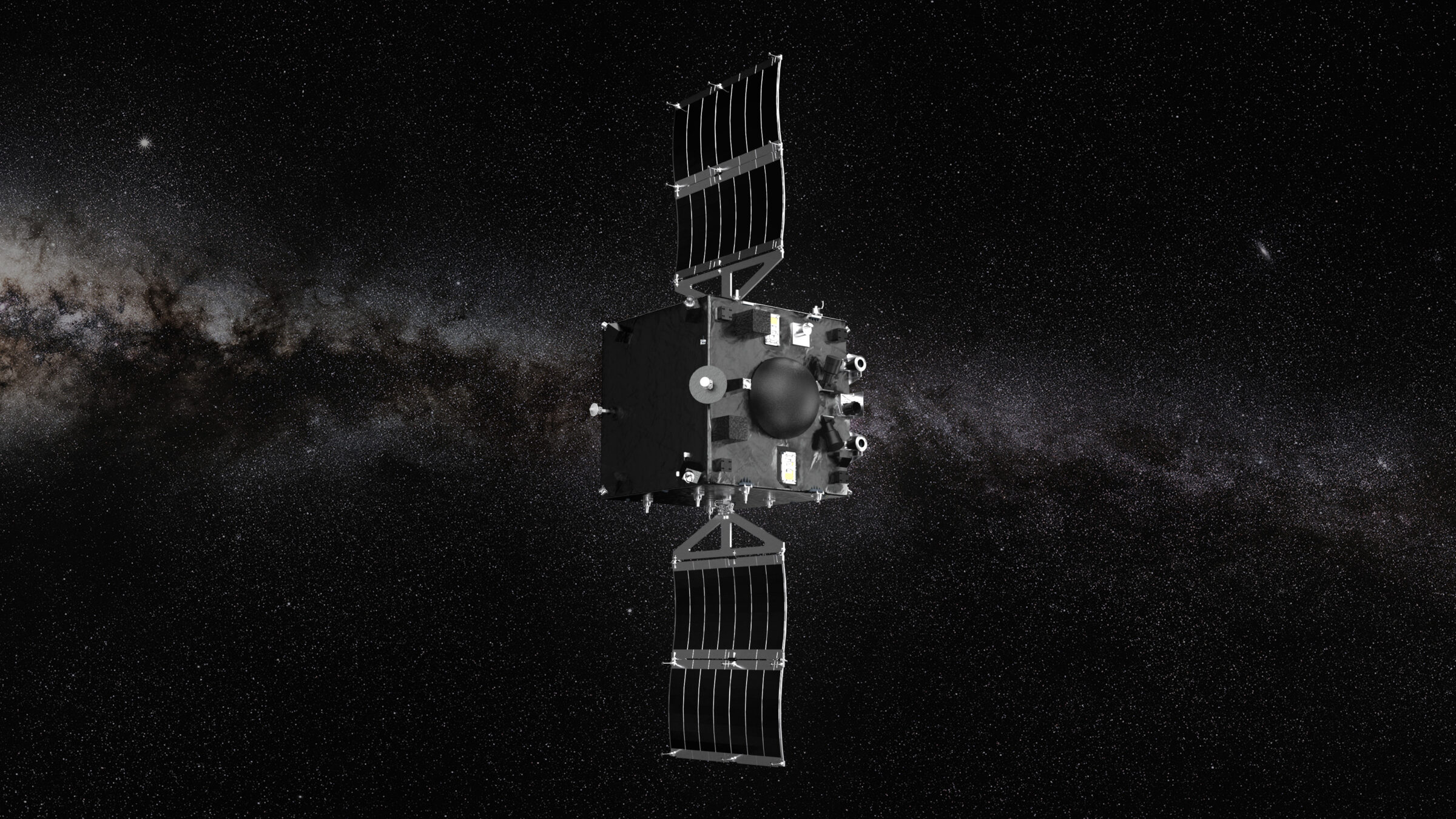
Ramses is a planetary defense mission that will rendezvous with the near-Earth asteroid Apophis. The mission is considered a unique opportunity to study Apophis during its exceptionally close approach to Earth. Using a suite of scientific instruments, Ramses will conduct a thorough before-and-after survey of the asteroid’s shape, surface, orbit, rotation and orientation.

As Apophis moves closer to Earth, it will be visible in the night sky with the naked eye, and the Ramses spacecraft, with Redwire’s onboard computer, will be flying right alongside it.
The Genesis Mission
Genesis will improve the precision and long-term stability of the International Terrestrial Reference Frame (ITRF), the foundation of satellite navigation and Earth science. Genesis will co-locate the four earth-measuring techniques (Global Navigation Satellite System-GNSS, Very-Long-Baseline Interferometry-VLBI, Laser Retro-Reflector-LRR and Doppler Orbitography and Radio-positioning Integrated by Satellite-DORIS instruments) onboard one satellite. Genesis could have far-reaching benefits, including better predictions of the impact of sea level rise, more precise calculation of ice mass loss, better natural hazard prediction, deeper insight into climate change, and more precise positioning of satellites and space probes.
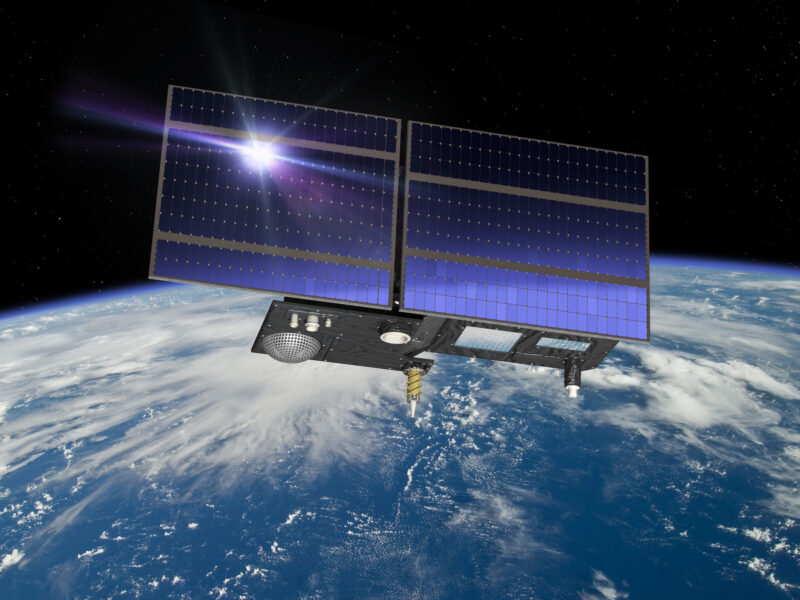
The onboard computer will be critical to the high level of precision necessary for the mission, enabling real-time data processing and synchronization, precise timing control, and integrating data from different sensors in real time.
Redwire is a leader in developing avionics systems, having delivered onboard computers for a number of successful ESA missions like Hera, Comet Interceptor, and Proba-3.
Read more about Redwire’s onboard computer for the RAMSES and Genesis missions here: Redwire Readies Flight Systems for Upcoming ESA Asteroid and Remote Sensing Missions | Redwire
More about ESA’s Ramses mission: https://www.esa.int/Space_Safety/Planetary_Defence/Ramses_ESA_s_mission_to_asteroid_Apophis
More about ESA’s Genesis mission: https://www.esa.int/Applications/Satellite_navigation/Genesis