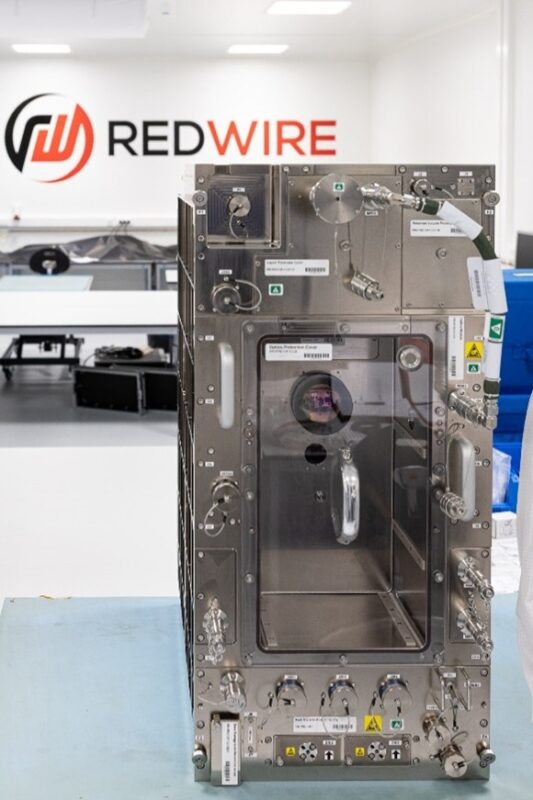
Redwire’s new science facility developed for the European Space Agency (ESA) was successfully installed onboard the International Space Station (ISS) on September 30. The Heat Transfer Host 2 (HOST) instrument, developed by Redwire’s team in Belgium, is providing unprecedented insights and new data on the processes of evaporation and condensation, which will help optimize the performance and efficiencies of heat transfer and thermal engineering technologies here on Earth and in space. Redwire designed and developed HOST and three accompanying experiments for ESA. ESA has reported that HOST is working flawlessly.
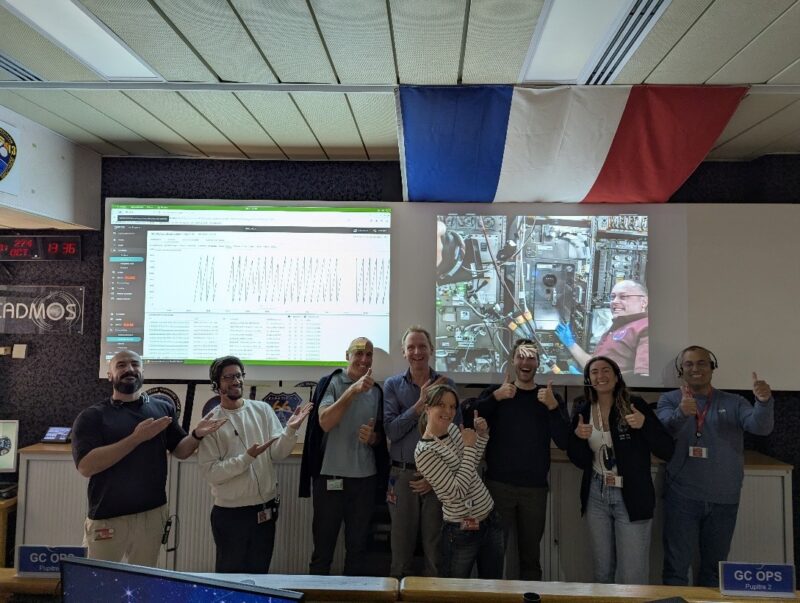
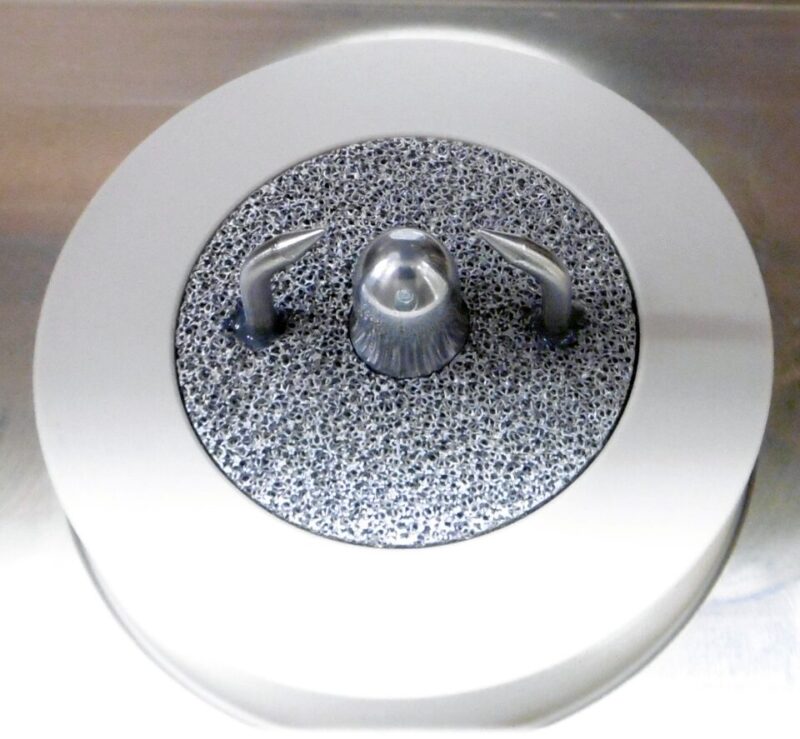
The first HOST experiment, The Condensation on Fins experiment, is currently underway. The experiment is studying the role of capillary pressure, the force that pulls liquids through tiny spaces, during film condensation without the force of gravity. In space, microgravity alters how heat flows through gases and liquids, which could impact a spacecraft’s ability to cool down electronics in extreme environments. This is the first European experiment to observe the shape liquid films take on cooled surfaces onboard the ISS.
Following this first condensation study, the campaign will continue with the Marangoni in Films experiment, focused on instabilities in evaporating liquid films.
About HOST
A key objective of the HOST instrument is to demonstrate that the heat transfer rate on curvilinear surfaces is significantly larger than on smooth surfaces and that complex surface geometry can deliver higher levels of performance. The results of the HOST experiments will be significant for improving the performance of a wide range of condenser technologies, including heat pipes to chillers and air-conditioners.
Redwire’s Belgium facility has more than 50 years of spaceflight heritage developing innovative microgravity technology for game-changing ESA programs. Other microgravity research payloads developed by Redwire’s Belgium team include the COLIS facility to give insight into the functioning of various facilities and the Arthrospira-C investigation to advance spacecraft biological life support systems.
Find out more about the game-changing technology being developed Redwire’s Belgium facility here: ESA’s Skimsat VLEO Mission Moves forward with Redwire Primeship in Cooperation with Thales Alenia Space | Redwire Space