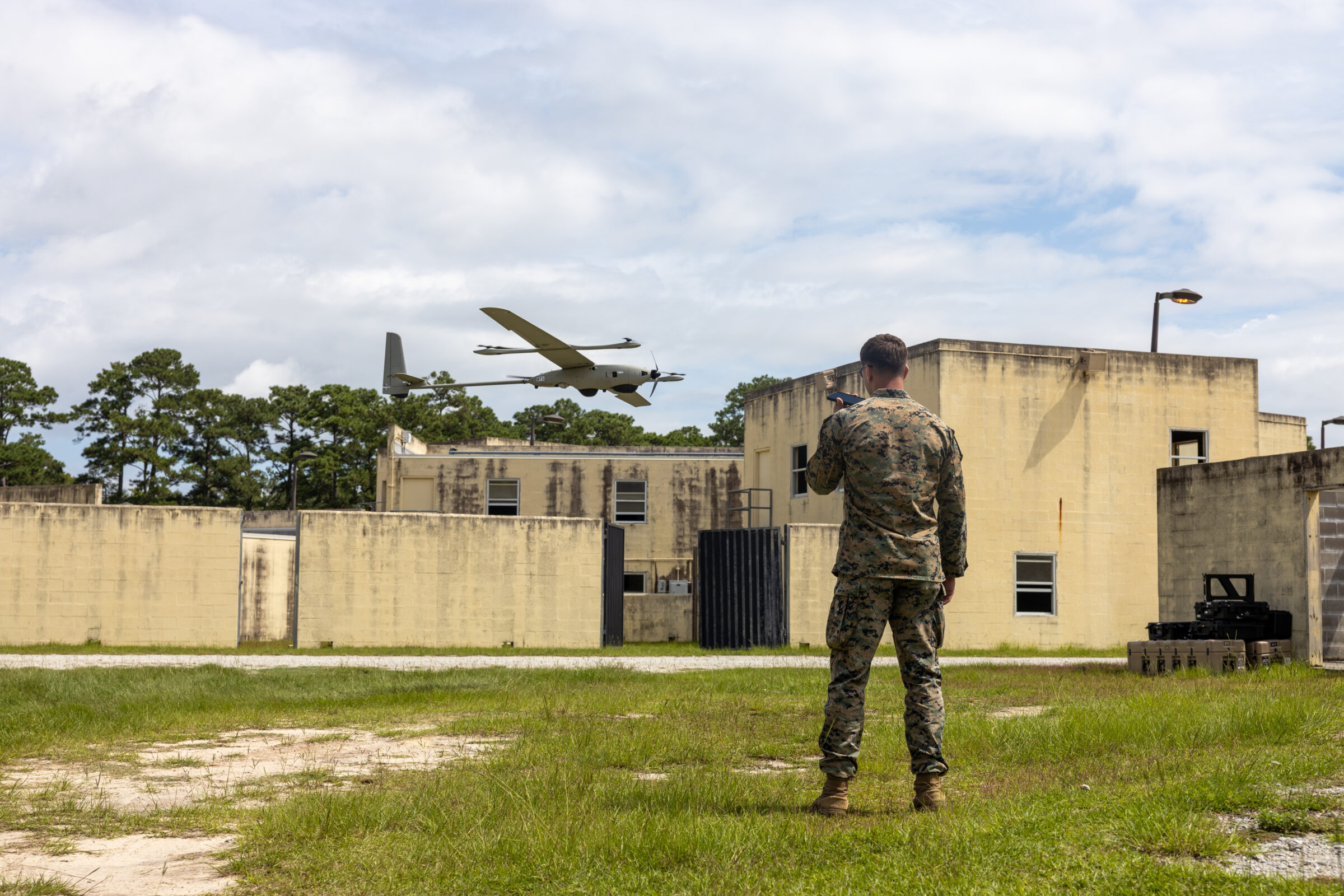
Redwire is dedicated to creating innovative yet reliable capabilities for the warfighter. This commitment led to the development of an adaptable Group 2 aircraft that bridges capability gaps between large UAS and very small drones—all while anticipating future battlespace requirements. The goal was always a future-proof, “workhorse” UAS as customizable as a favorite pickup truck.
Stalker UAS is that aircraft and over the past two decades, it has continued to evolve.
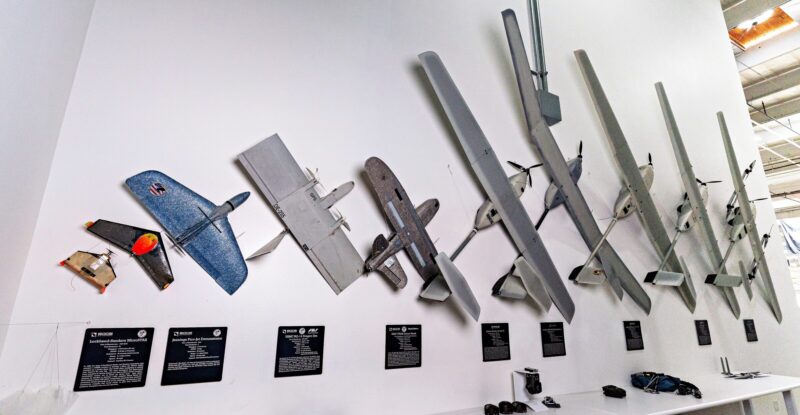
From the Stalker Block 0 first developed in 2006 at Jennings Aeronautics to the latest Block 40 system fielded by Redwire today, major improvements were made with every iteration. The aircraft’s constant progression is the result of listening to our customers, including the U.S. Marine Corps, the U.S. Army, and the UK Ministry of Defence. Redwire is contracted on several Programs of Record supporting these customers, which facilitates an ongoing feedback loop combined with combat proven experience from deploying Stalker in challenging, contested environments like Afghanistan and Ukraine.
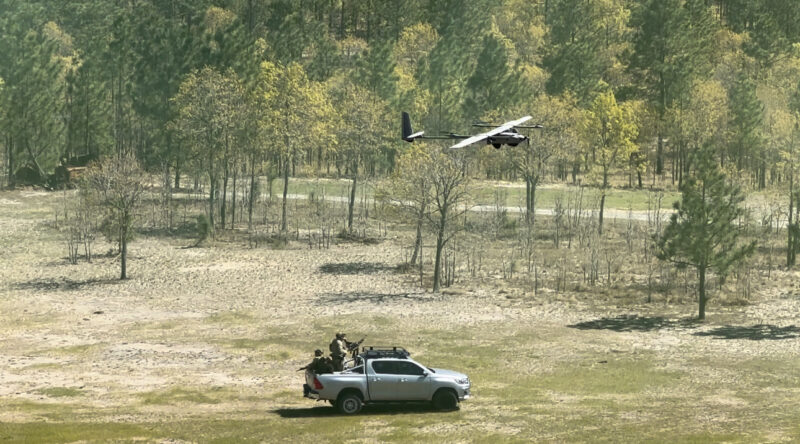
An estimated 1,000 Stalker UAS have been produced between 2006 and 2026—a testament to the aircraft’s pedigree and ongoing relevance for a rapidly changing battlespace. The lessons learned from twenty years of evolution are empowering Redwire to continue providing the innovations warfighters need to achieve their mission.
Early Innovations Based on Military Customer Feedback
Solving specific customer problems with each iteration of Stalker led to numerous technological breakthroughs, such as equipping the aircraft with the Vertical Takeoff and Landing (VTOL) capability that Stalker demonstrates today. The customer response was enthusiastic, with leaders from the Marine Corps calling Stalker “the unicorn aircraft we’ve always wanted.”
Despite these innovations, the goal of providing the warfighter with resilient, mission-critical capabilities means that several of Stalker’s most reliable features have remained constant.
From its inception, Stalker was built for rapid, tool-less deployment by a small team in minutes. It was designed to be a silent, electric, multi-INT platform that can fly covertly at low altitudes.
Over the years, improvements were made to the aircraft’s long range, long endurance capabilities, payload capacity and portability, and ease of integration for the end user. The result is a small, long range UAS suitable for mission sets normally reserved for larger, more logistically cumbersome, and far more expensive aircraft.
Meeting Core Modernization Goals with MOSA
Building on this solid foundation, what has changed most over the past two decades is the degree of modularity Stalker offers. In part, this is the result of the solid oxide fuel cell integrated at the request of the Defense Advanced Research Projects Agency (DARPA) and the Army Research Laboratory. Redwire is the only UAS company offering this unique fuel cell option, which dramatically increases the aircraft’s endurance and enabled Stalker to set a world record of non-stop flight for a Group 2 UAS at 39 hours and 17 minutes—while carrying a payload.
This payload capability is critical because impressive flight distances mean little if the aircraft can’t carry the technology needed to provide the situational awareness that gives warfighters the advantage over adversaries. By engineering Stalker to have a small logistical footprint while offering many capabilities of larger UAS—long range, long endurance, the ability to carry multiple diverse and exquisite payloads—the aircraft offers multi-mission flexibility at a much lower cost.
Redwire’s intention is to give the customer options that allow them to adapt the aircraft to the needs of the mission.
Stalker was designed with a modular open systems approach (MOSA) from the start and at Redwire, MOSA isn’t a buzzword. A payload-agnostic UAS, Stalker has flown with over 40 different sensors, including Signals Intelligence (SIGINT), Electronic Warfare (EW), Electro-Optical Infrared (EOIR), and synthetic aperture radar (SAR) payloads. Many of these payloads were integrated without Original Equipment Manufacturer (OEM) support, which is the goal.
But Stalker wasn’t just designed with open architecture when it comes to what it can carry; the system’s modularity extends to software integrations and communication networks as well. Because Stalker can carry several meaningful payloads while broadcasting across multiple networks, it reduces the operator’s cognitive load and allows for better, faster decision-making—without the logistical support required to deploy large legacy systems.
The Future of UAS Operations is Flexibility
When Stalker’s modularity and performance is combined with emerging capabilities like onboard navigation, advanced GPS/GNSS, anti-jam capability, visual-based navigation, and AI technology, the result is a system outfitted for even the most austere or contested environment.
The vision for Stalker has always been to design the most flexible platform today that continues to outperform everything else on the market in the future—whatever that future looks like.
Redwire wants to see customers empowered to act independently without OEM oversight, quickly customizing Stalker to meet their most urgent needs in a rapidly changing battlespace. But achieving mission success isn’t dependent only on the platform itself, which is why Redwire’s Flight Operations team provides additional support through worldwide operator training programs and a 24-hour hotline.
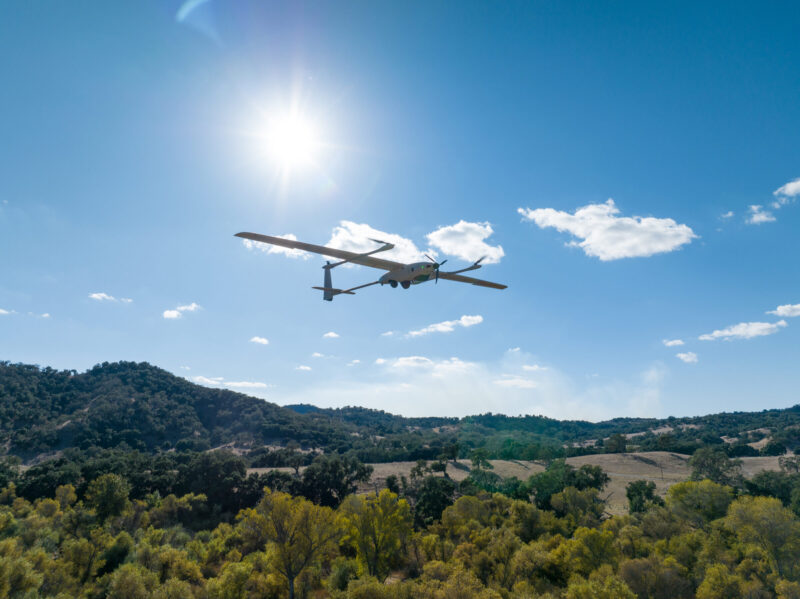
Stalker was engineered for ease of use, but if customers want extra support, Redwire provides it and is eager to keep that engagement alive. This ongoing dialogue is also how Redwire prepares for future unknowns. By remaining proactive instead of reactive, it becomes possible to anticipate what customers will need from a UAS in this ever-shifting landscape.
For example, conflicts like the war against Ukraine have made it undeniable that UAS survivability in contested environments is critical to mission continuity. That’s why Stalker is equipped with a Positioning, Navigation, and Timing (PNT) fusion engine, providing a flexible advanced navigation platform where new technologies can be integrated for rapid adaptation to emerging EW threats.
Additionally, Stalker’s Satellite Communications (SATCOM) capabilities “untether” the aircraft and extend its operational range Beyond Line of Sight (BLOS), allowing the UAS to maintain connectivity even when terrain, distance, or other obstacles interfere with local communications. This extended range is one of the critical capabilities that enable Stalker to take on the traditional role of larger UAS, but with a smaller logistical footprint and less risk to high-cost assets.
Stalker’s name has remained consistent from Block 0 through to Block 40 today, but after twenty years of reliably serving the warfighter with thousands of deployments across six continents, this combat proven aircraft has never stopped evolving. And the innovations will only continue. Ultimately, it is this commitment to constant iteration that makes any asset—and the force using it—future-proof.
Learn more about the Stalker UAS at RDW.com